


Hair Transplant Revision in Turkey: Correcting Unnatural Results Safely
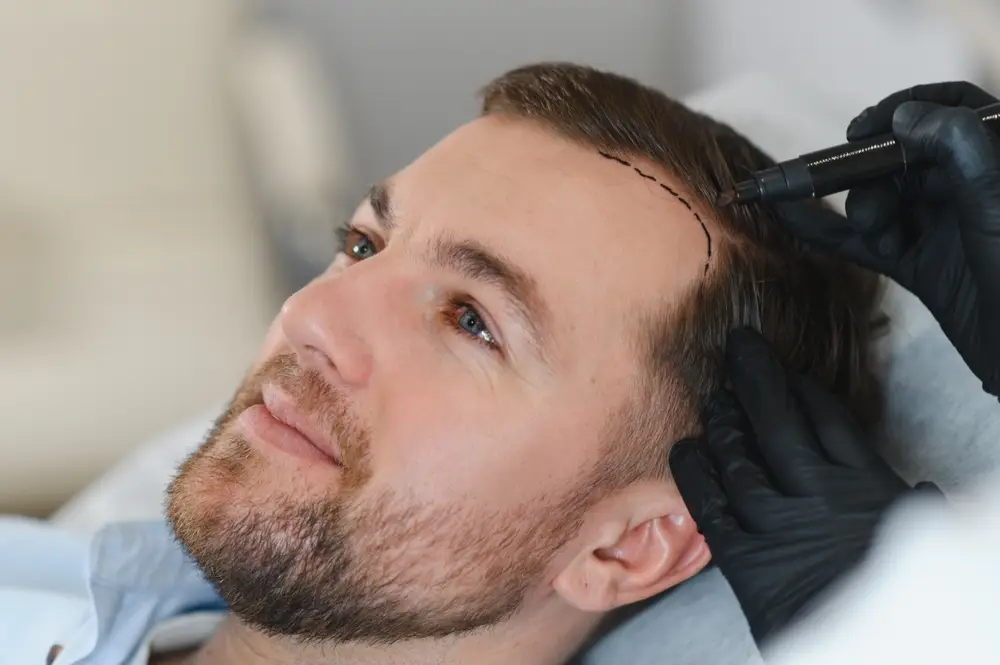
Waking up every morning, walking to the mirror, and seeing your head hairline looking “fake” is often more stressful than losing hair in the first place. It may look too straight, like a wall, or resemble “doll’s hair. “If this is your reality and you feel like your first hair transplant was a mistake, do not lose hope; you can still achieve the look you wanted. In 2026, hair transplant revision in Turkey has evolved from a simple “fix” into a specialized “rescue mission” for patients ready to reclaim an authentic, undetectable look.
Hair transplant revision is now a recognized part of long-term hair restoration planning. Some patients seek it due to technical limitations of earlier procedures, while others experience changes in natural hair loss patterns over time. In regulated medical environments, revision procedures focus on improving harmony, density balance, and hairline design rather than repeating the same approach used initially.
Who Needs Hair Transplant Revision in Turkey?
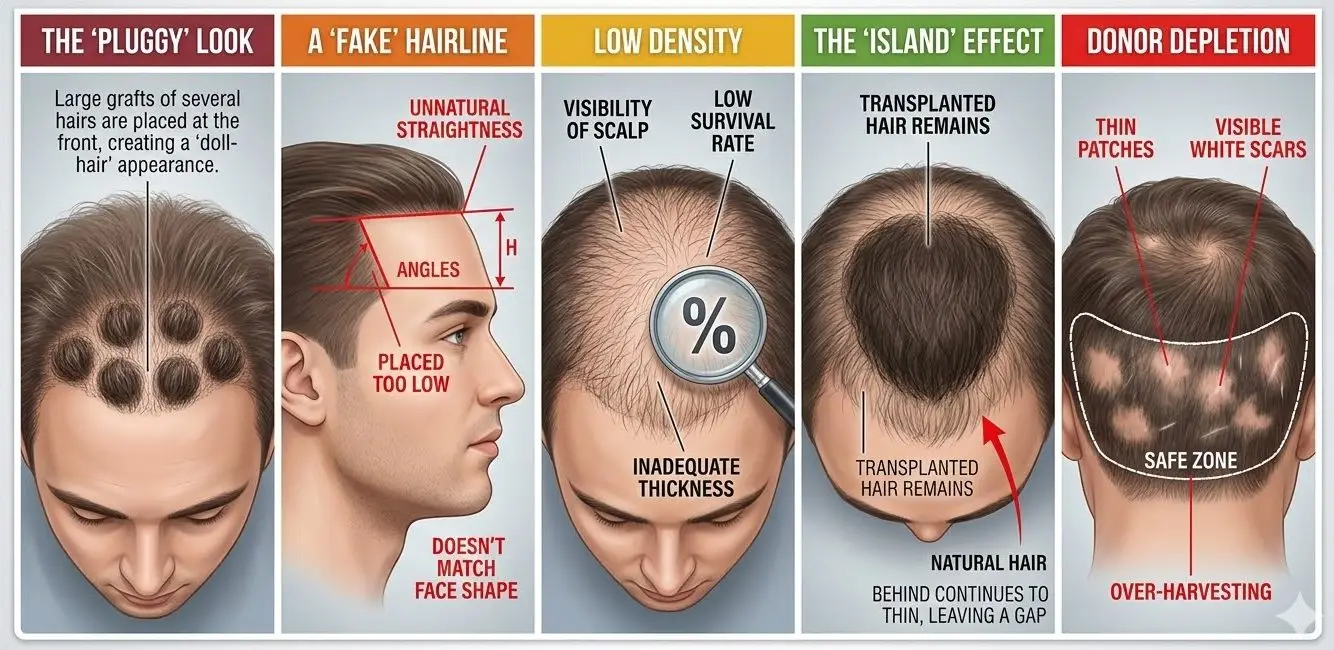
A hair transplant revision in Turkey is a second surgery to correct or improve a previous hair transplant. According to research published in the National Institutes of Health (NIH), common reasons for an unfavorable result include errors in judgment or technique. You might need this if you experience:
- The “Pluggy” Look: Large grafts of several hairs are placed at the front, creating a “doll-hair” appearance.
- A “Fake” Hairline: A hairline drawn in a perfectly straight line or placed too low for your face shape.
- Low Density: Visible scalp because the first surgery had a low survival rate.
- The “Island” Effect: Transplanted hair remains, but your natural hair behind it continues to thin, leaving a gap.
- Donor Depletion: Thin patches or white spots in the back of your head from over-harvesting.
Are You a Candidate for Hair Transplant Revision?
To determine if you qualify for a hair transplant revision in Turkey, surgeons evaluate the following:
- Enough Donor Hair: You must have healthy follicles left in your donor areas. If the scalp is depleted, surgeons can use Body Hair Transplant (BHT) to harvest hair from the beard or chest.
- Scalp Tissue: New grafts require a healthy blood supply. If your scalp is still inflamed or heavily scarred, the success rate can be affected.
- The 12-Month Rule: You must wait at least a year. Clinical observations show that final growth and tissue healing take 12 months to be fully realized.
- Good Health: Candidates should have stable health to ensure proper healing of the delicate recipient site.
The Path to a Natural Look: What to Expect
A revision hair transplant is a sophisticated process that requires higher technical skill than a first-time procedure.
The Design & Camouflage Phase
Your surgeon will redraw your hairline to match your age and face shape. They often use a “camouflage” technique, placing very fine single-hair follicles in front of old, thick grafts to soften the transition.
The Procedure Day
The surgery usually takes 4 to 8 hours. Modern clinics use soft anesthesia, which makes the numbing process painless. Surgeons often prefer DHI (Direct Hair Implantation) for revisions because it allows for precise angle and depth control when working around existing hair or scar tissue.
The “Shock Loss” Phase
About 2 to 8weeks after a hair transplant, the new hair will fall out. This is a normal part of the hair cycle. While stressful, it is a sign that the follicles are resetting for healthy growth.
The Recovery timeline
Recovery for a revision requires extra care because the scalp skin is often tougher from previous work.
- Days 1–3: Swelling is common. You must follow a strict “head-up” sleeping position.
- Days 7–10: Scabs will fall off. The donor area begins to heal significantly.
- Weeks 2–8: Temporary shedding (“shock loss”) may occur
- Months 3–4: Early growth begins. The hair will look thin and soft initially.
- Months 8–12: This is when you see the true change. Because blood flow is slower in scar tissue, final maturation of the hair follicles can take slightly longer than a primary transplant.
Does Hair Transplant Revision Always Work?
Hair transplant are delicate operations in which the surgeon must work around the damage left by previous procedures. Getting a perfect look the second time is tough, and here’s why:
- The donor area: You only have so much “safe” hair on the back of your head. If the first clinic was reckless and over-harvested, there just might not be enough left to give you to achieve the high density you originally wanted.
- Scarring: Every surgery leaves a mark. If your scalp is covered in “cobblestones” (bumpy skin) or thick scars from old-school plugs, the blood doesn’t flow like it used to. Without good blood flow, new hair grafts struggle to survive the move.
- Permanent texture damage: Sometimes the first procedure leaves the skin’s texture so ruined or the hairline so low that it can’t be totally erased. The doctor can make it look a lot better, sure, but “perfection” is not always clinically possible.
- Expectations vs. Reality. A revision is a rescue mission. Because the scalp has already been through the wringer, a second hair transplant seldom hits the same density as a successful first-time procedure.
What Actually Makes a Repair Work?
Even with those hurdles, most patients see a massive transformation when the right specialists handle the job. A good result usually comes down to three things:
- Specialized Medical Expertise: You don’t just need a surgeon; you need a repair specialist. This job is way harder than a standard transplant. It takes someone who knows how to pull out old, pluggy grafts and re-angle them so they look natural.
- Using Body Hair: If the scalp donor area does not provide sufficient grafts, follicular units may be harvested from other regions of the body, such as the beard or chest. This technique, known as Body Hair Transplant (BHT), allows surgeons to obtain additional grafts and can be used to improve density in areas of thinning when the scalp donor supply is limited.
- A Custom Game Plan: No two repairs are the same. A successful plan focuses on softening that “wall” of a hairline, hiding old scars, and putting every single hair exactly where it’ll do the most work.
It’s a complicated, tricky process, but a solid revision is still the best way to stop wearing hats and finally get your confidence back.
Why Turkey is Safer in 2026
The Turkish Ministry of Health has introduced strict safety regulations to protect international patients. When choosing a clinic, ensure they adhere to these 2026 standards:
| 2026 Safety Rule | What it means for you |
| Doctor-Led Surgery | A licensed doctor must perform the incisions and lead the surgical team. |
| Accredited Facilities | Clinics must hold a specific license for hair transplantation from the Turkish Ministry of Health. You can verify on the “HealthTür kiye” government portal. |
| Compulsory Insurance | All international patients have insurance covering potential complications. |
FAQ: Common Questions
Can I fix a very low or straight hairline?
Yes. Misplaced grafts can be removed, and a new, more age-appropriate hairline can be designed using single-hair follicles.
What if my donor area is over-harvested?
If the back of your head is thin, surgeons can use beard hair, which is a strong and reliable alternative for adding density to the crown.
Is the recovery longer for a second transplant?
The initial healing is the same (10 days), but the hair may take 2–3 months longer to reach full thickness compared to a primary transplant.
Conclusion: Get Your Confidence Back
A hair transplant revision in Turkey is a complicated, tricky process, but it is still the best way to stop wearing hats and finally get your confidence back. At Hestanbul, we specialize in correcting difficult cases within JCI-accredited hospitals and provide a life warranty certificate to ensure your second chance is a total success.
If you are unsure whether hair transplant revision is appropriate, contact us today for a free online consultation with our lead repair specialists.